Noah Vogel · 5 September 2026
Shifting Paradigms in Verification Software: Focus on Adaptive Algorithms for Dynamic User Needs
Verification software has moved through several distinct phases over the past two decades, and each phase introduced tighter integration between identity checks and real-time data streams. Early systems relied on static rule sets that processed fixed inputs such as document scans and basic biometric matches. Those approaches worked adequately when user populations remained stable and device ecosystems changed slowly. Yet the rapid expansion of mobile access, cloud services, and cross-border transactions exposed the limits of rigid logic. Data from government agencies and research institutions now shows that organizations began testing machine-learning components around 2018 to handle variability in user behavior. By 2023 the focus had shifted toward algorithms capable of rewriting their own decision thresholds during live sessions.
The Move Toward Adaptive Mechanisms
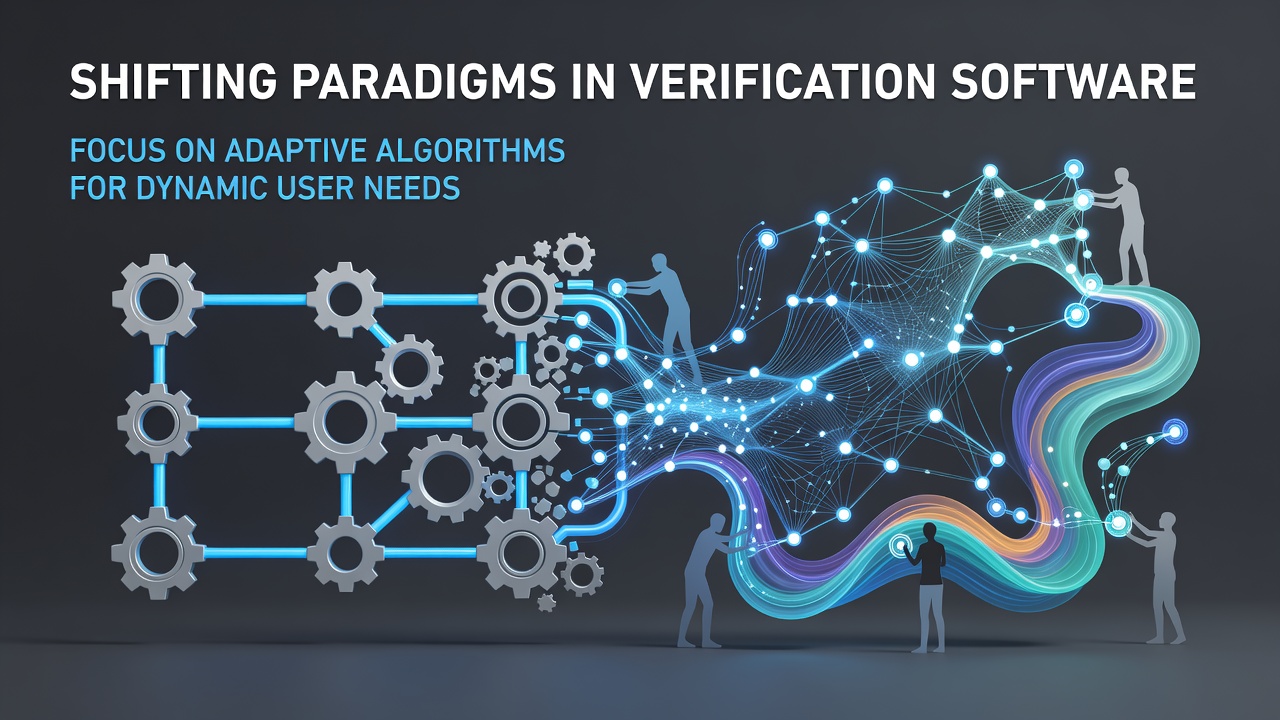
Adaptive algorithms differ from earlier models because they adjust parameters while verification runs rather than after the fact. Researchers at institutions tracking digital identity systems report that these algorithms monitor signals such as typing cadence, device location history, and network latency within the same session. When a pattern deviates from expected ranges the system recalibrates risk scores without requiring a full restart. The National Institute of Standards and Technology documented several pilot programs where such recalibration reduced false rejection rates by measurable margins. Those pilots also recorded shorter average completion times for legitimate users who accessed services from new locations or devices.
Implementation requires continuous feedback loops that draw on both historical records and fresh session data. Engineers design these loops so that the algorithm updates its internal weights after each successful or failed verification attempt. Because the updates occur locally within the verification engine, organizations avoid transmitting raw behavioral data to external servers. This architecture satisfies several regulatory frameworks that emphasize data minimization while still allowing the system to respond to changing conditions.
Addressing Dynamic User Requirements
User needs shift across time zones, device types, and transaction values. A verification process that works for a routine login may prove too cumbersome when the same user initiates a high-value transfer from a new tablet. Adaptive algorithms accommodate these variations by selecting different authentication factors on the fly. Studies compiled by the European Union Agency for Cybersecurity indicate that systems using dynamic factor selection maintained comparable security levels while cutting average user effort by noticeable percentages. The selection process considers context signals such as recent travel patterns, time since last verified location, and device integrity scores.

Organizations that deployed these systems reported that support tickets related to verification friction dropped after rollout. The improvement stems from the algorithm's ability to recognize returning users across devices and lower the required proof level accordingly. At the same time the system raises scrutiny when multiple risk indicators appear together. This balance keeps security posture intact while responding to legitimate changes in user context.
Technical Components Underpinning Adaptation
Modern adaptive verification platforms combine several core modules. A data ingestion layer collects telemetry from the user device and the network path. A feature extraction module converts raw signals into standardized vectors. The central decision engine applies learned models that evolve with each interaction. Finally an audit module logs every parameter change so that compliance teams can review the sequence of adjustments. Academic papers presented at the 2025 IEEE Symposium on Security and Privacy described lightweight neural architectures that fit within these modules and update in milliseconds. Those architectures rely on incremental learning techniques rather than full retraining cycles, which reduces computational overhead on edge servers.
September 2026 will see the release of an updated technical standard from the International Organization for Standardization that formalizes testing procedures for adaptive verification engines. The draft standard outlines metrics for measuring both security effectiveness and user experience impact. Several national standards bodies have already signaled alignment with the forthcoming document, which should streamline procurement requirements for government and enterprise buyers.
Integration With Existing Infrastructure
Many verification platforms operate alongside legacy identity providers and fraud detection suites. Adaptive algorithms integrate through standardized APIs that accept and return structured risk scores. This approach allows gradual migration rather than wholesale replacement. Reports from the Australian Digital Transformation Agency note that agencies adopting phased rollouts experienced fewer service disruptions during transition periods. The phased method also gave operations teams time to calibrate alert thresholds based on actual traffic patterns observed after each stage.
Conclusion
Verification software continues to evolve as user populations and threat landscapes change. Adaptive algorithms supply the flexibility needed to match verification rigor with context while preserving auditability and regulatory compliance. Ongoing standards work and measured deployment results indicate that this paradigm will remain central to digital identity systems for the foreseeable future.