Logan Keller · 3 October 2026
Navigating Niche Verification Challenges in Decentralized Supply Chain Networks
Decentralized supply chain networks rely on distributed ledger technologies to track goods from origin to destination while verification processes confirm data accuracy at each stage and observers note that these systems face unique hurdles when applied to specialized sectors such as pharmaceuticals or perishable agricultural products because traditional centralized databases give way to peer-to-peer validations that demand consensus across multiple independent nodes.
Researchers have documented how niche markets introduce additional layers of complexity since verification must account for variables like temperature fluctuations in cold chain logistics or batch-specific chemical compositions in specialty chemicals and data shows that failures in these areas can lead to compliance issues with regulatory bodies across different regions.
Core Verification Mechanisms in Decentralized Setups
Smart contracts automate many verification steps by executing predefined rules when conditions such as delivery timestamps or sensor readings match established thresholds and experts have observed that this automation reduces human error yet it requires precise coding to handle exceptions common in niche industries where product specifications vary widely.
Interoperability between different blockchain protocols presents another challenge because supply chain participants often use incompatible platforms and studies from academic institutions indicate that bridging these gaps involves standardized APIs which allow seamless data exchange while maintaining cryptographic security.
Regional Regulatory Influences on Verification Practices
European Union directives on digital product passports require detailed traceability data in decentralized networks and according to reports from the European Commission such mandates push companies to integrate verification tools that comply with cross-border standards whereas similar efforts in Canada through the Canadian Food Inspection Agency focus on food safety records that demand real-time updates from distributed sources.
In October 2026 industry conferences highlighted new frameworks emerging from Australian government initiatives that emphasize blockchain-based verification for mineral supply chains and these developments demonstrate how geographic variations influence the adoption of verification protocols tailored to local resource extraction practices.
Technological Adaptations for Niche Challenges
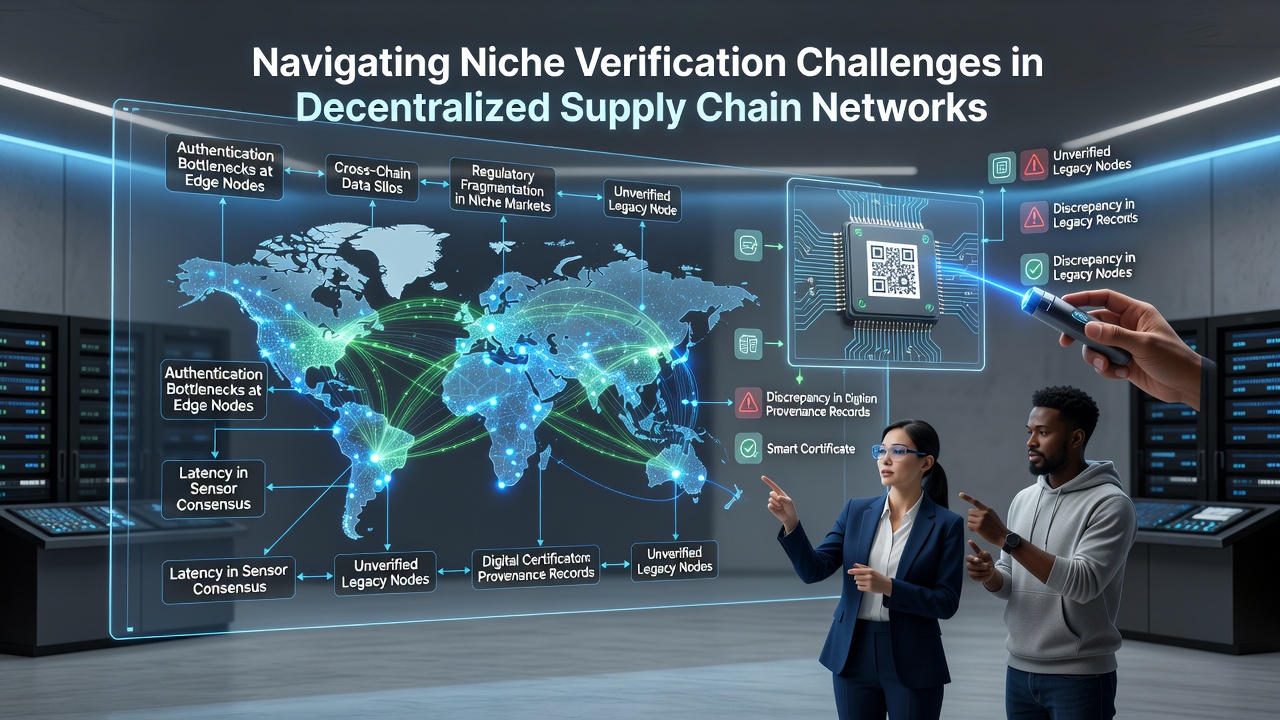
Integration of Internet of Things devices provides continuous data streams for verification but in decentralized environments this creates bandwidth and synchronization issues that researchers address through edge computing solutions which process information closer to the source and reduce latency while preserving teh integrity of the overall ledger.
Privacy concerns arise when sensitive business information such as supplier pricing or proprietary formulations enters shared networks and industry organizations like the World Economic Forum have explored zero-knowledge proofs as a method to verify claims without revealing underlying data details and this approach finds application in sectors where competitive advantage depends on confidentiality.
Take one case where experts found that pharmaceutical distributors adopted hybrid verification models combining public blockchains for shipment tracking with private channels for detailed batch records and figures reveal improved audit outcomes after implementation because discrepancies surface earlier through automated alerts.
Strategies Employed by Industry Participants
Companies navigate these challenges by forming consortia that establish shared verification standards and data indicates such collaborations accelerate the development of common protocols while individual firms experiment with modular software that adapts to specific niche requirements like organic certification or ethical sourcing audits.
Training programs for supply chain personnel emphasize understanding decentralized verification tools and reports from research institutions show that organizations investing in such education experience fewer integration setbacks because staff members grasp both the technical and regulatory aspects involved.
Conclusion
Decentralized supply chain networks continue to evolve as verification methods adapt to niche demands and evidence from multiple sources points to ongoing refinements in technology and policy that support more robust traceability across diverse industries.